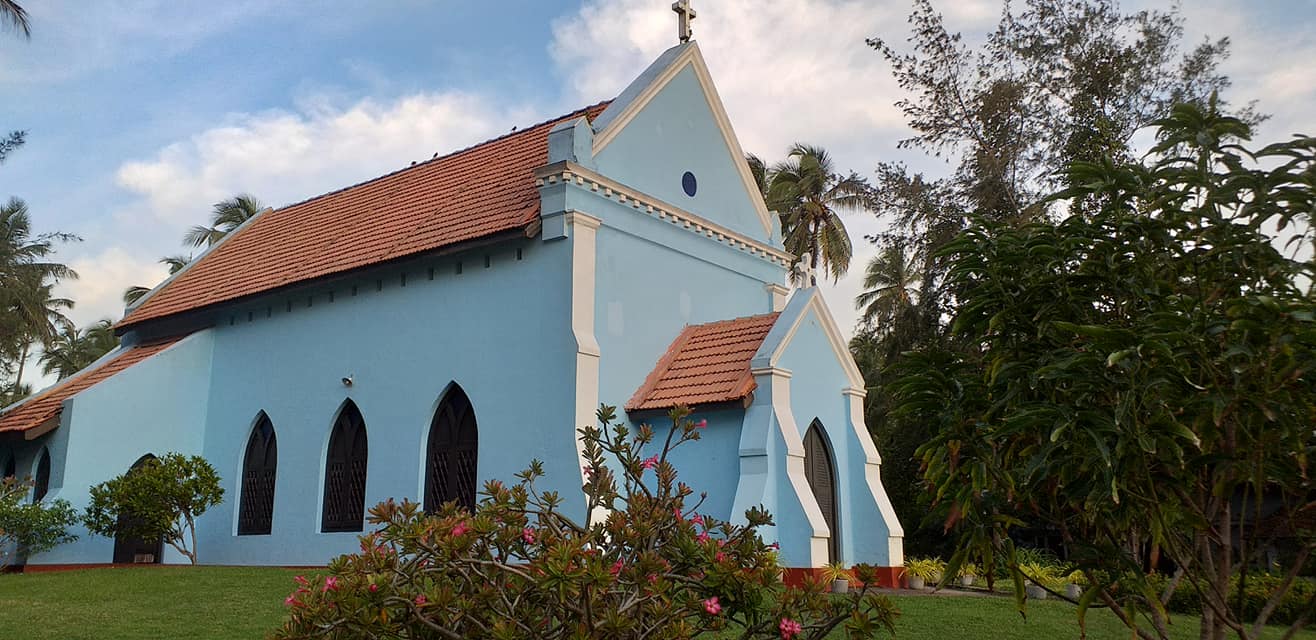
Deep in the heart of Kegalle stands a monument not just of stone and mortar, but of persistence and faith. The history of St. John the Baptist Church is a fascinating tale of a community that refused to take "no" for an answer, eventually turning a government refusal into a beautiful sanctuary that has served the district for over a century.
The Spark: A Request Denied
The movement to establish an Anglican church in Kegalle began in a rather unusual way—through a bureaucratic rejection. In September 1863, the inhabitants of the district petitioned the Lord Bishop of Colombo, Piers Calverley Claughton, for a very specific reason: they needed a licensed place to get married.
At the time, there was no consecrated space for the "Solemnization of Marriages" according to Anglican rites. The community initially asked the government to license the local schoolroom for this purpose. However, the School Commission refused, stating it was "undesirable" for a school to be so licensed.
As the Rev. G. B. Ekanayake later noted, "No refusal perhaps ever had a happier result." Instead of giving up, the community decided it was time to build a church of their own.
Founding Fathers and the Building Effort
A public meeting was held on October 10, 1863, to appoint a Building Committee. Led by figures such as F.R. Saunders (the Assistant Government Agent) and supported by prominent locals like Messrs. Thwaites, Austin, and Wijesinghe, the committee set out to raise funds.
The financial journey was a testament to the congregation’s dedication:
Total estimated cost: Approximately £517 (including the site, road, and fittings).
Government Grant: The Treasury pledged £200.
Community Contribution: Over £235 was raised by the people themselves.
Though the name of the architect remains a mystery of history, we know the design was provided by Mr. Caley of the Roads Department.
Laying the Foundation
The ceremonial birth of the building took place on Saturday, September 16, 1865. On that day, the Corner Stone was laid by Bishop Piers, the 2nd Bishop of Colombo, during the 28th year of Queen Victoria's reign. The site’s Deed of Transfer was later finalized on January 22, 1866, marking the land as forever dedicated to the service of the church.
Opening for Worship
After years of planning and construction, the doors finally opened for Divine Worship on February 2, 1868 (the Feast of the Presentation of our Lord). This date became the benchmark for the church’s milestones, leading to its grand 75th Anniversary (Jubilee) celebrations in 1943.
The 75th Anniversary: A Call to Sacrifice (1943)
By the time 1943 arrived, the church was a cornerstone of the Kegalle community. Under the leadership of B. M. Wikramanayake (Priest-in-charge), the parish celebrated its Diamond Jubilee.
The celebrations were not just about looking back, but also looking forward. The Trustees launched a Jubilee Reserve Fund with a goal of Rs. 10,000 to ensure the church’s future. At a time when the church relied entirely on local subscriptions and "the produce of our lands," this fund was vital for maintaining the "outstation" church.
As Wikramanayake wrote to his parishioners:
"You are now enjoying the benefits of the sacrifices of those who have gone before you. It is now for you to make sacrifices for those who are yet to come."
A Living Heritage
Today, St. John the Baptist Church remains a symbol of the Sabaragamuwa Province’s colonial and spiritual history. From its origins as a humble petition for marriage rights to its status as a historic parish, it stands as a reminder that the strongest foundations are built on community spirit.
Credits & Historical Sources
This article was compiled using historical records from:
The Ceylon Church Times (Issue: Friday, 6th August 1937) – History of Churches of the Diocese by Rev. G. B. Ekanayake, M.A., D.D.
Official Jubilee Correspondence (January 1943) by B. M. Wikramanayake, Priest-in-charge, Kegalla.
Diocesan Records regarding the laying of the foundation stone (1865) and the Deed of Transfer (1866).
Recent posts